EXPLAINING THE STRUGGLE FOR HUMAN RIGHTS IN RUSSIA |
|
|
Hello and welcome back to the Digest. |
Today we’re covering repressions against comedians & Alexey Uvarov’s new piece. My apologies for the delay in this issue, I was a little under the weather this week. |
In solidarity, Dan Storyev |
|
|
Donate to OVD-Info to keep us running |
|
|
Trigger warning:
This is a newsletter about Russian repressions. Sometimes it will be hard to read. |
|
|
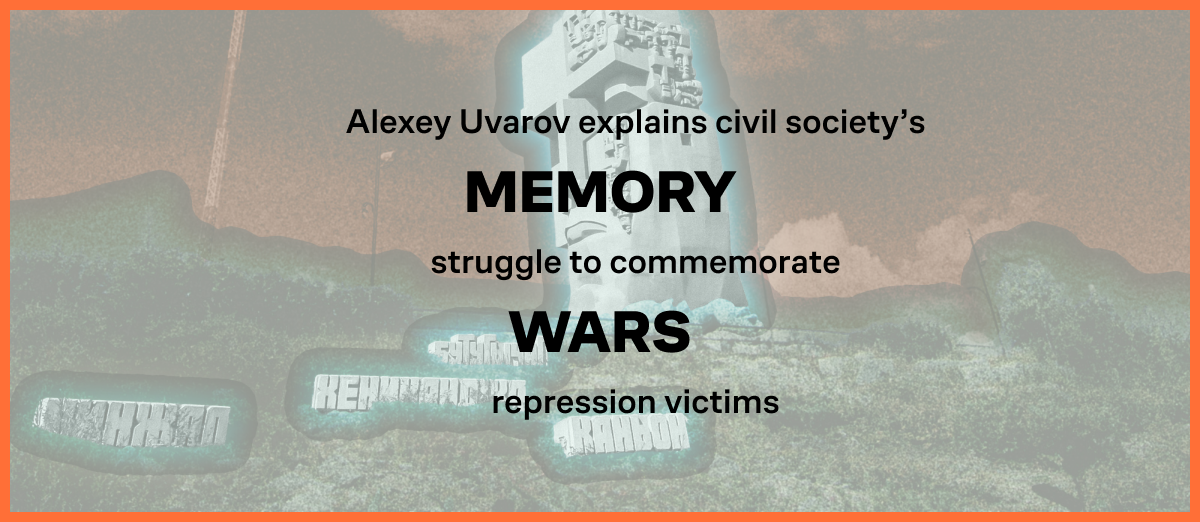
Since the collapse of the Soviet Union in 1991, Russia has witnessed competing approaches to remembering Stalin’s era of mass repression. Often, the discussion around the historical memory of Soviet repression is stereotyped as driven by Muscovite intellectual elites.
|
Yet to understand the broader dynamics of memory-making in Russia, we need to look beyond Moscow. Then, we will see how local communities across Russia have independently driven memorial efforts for decades, highlighting that the impulse to remember repression’s victims is of much value to ordinary citizens, and is deeply connected to their personal and local histories.
|
Since the 1990s, a network of grassroots memorial initiatives has emerged. Ordinary people, local historians, activists, and descendants of repression victims have created monuments, museums, and more across Russia’s regions — often in the face of indifference or even hostility from the state. Their persistence reveals the resilience of civil society under increasingly authoritarian conditions.
|
|
|
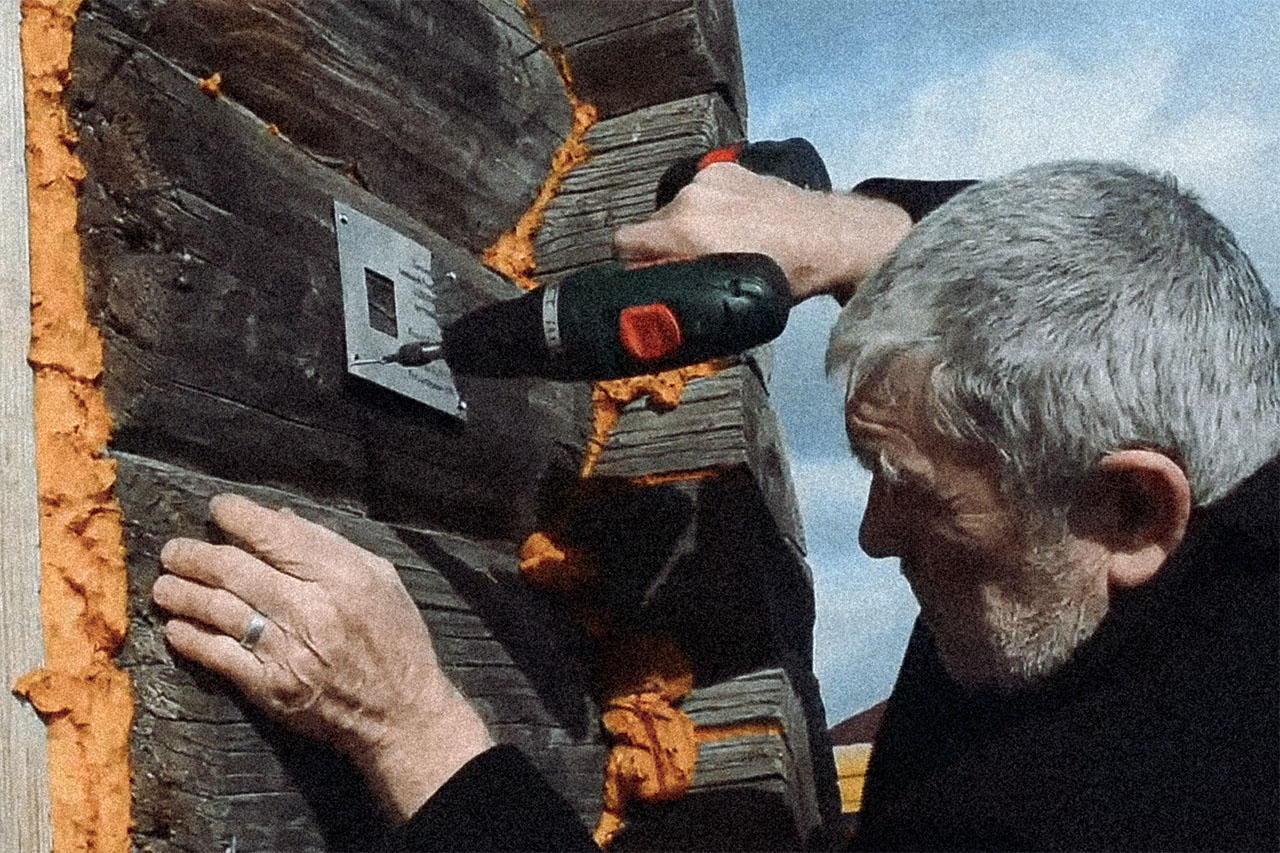
Vladimir Leshchenko, great-grandson of peasant Afanasy Leshchenko, who was executed in 1937 on charges of counter-revolutionary agitation, fastens a Last Address plaque to the house built by his ancestor in 1926. The house was confiscated from Afanasy Leshchenko during the dekulakization campaign in 1930. Afanasy’s son and Vladimir’s grandfather, Pavel Leshchenko, was also executed in Tomsk in 1938 / Screenshot: @tomsknkvd, YouTube |
|
|
Today the conflict continues to intensify between activists, who strive to keep the memory of repressions alive, and the Kremlin, which seeks to rewrite or minimise that painful history. Many believe the state’s hostility toward these memorials stems from a need to preserve a nostalgic, heroic image of the Soviet Union — admitting the full extent of the terror could undermine its current ideological stance and raise unsettling questions about continuity between past and present repressive methods.
|
|
|
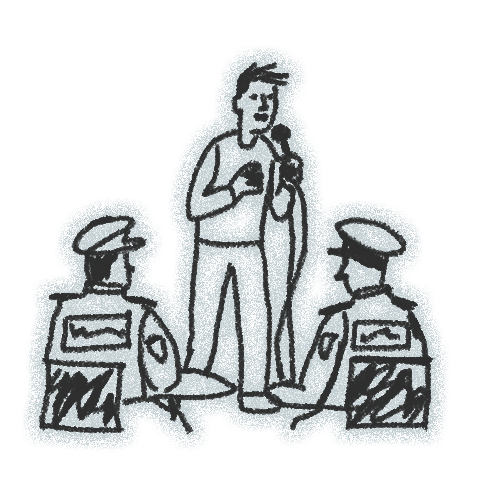
Earlier this week we celebrated April Fools Day. The custom has long been popular in Russia, celebrated across the country in schools, workplaces, families. However, the Kremlin doesn’t take kindly to humour — especially when this humour threatens its narratives.
|
The Kremlin began to put pressure on comedians long before the full-scale war. Some of the best-known cases are associated with the Russian Orthodox Church working hand in hand with the authorities to promote stringent conservative morals.
|
You might happen to remember Pokémon Go — an augmented reality game that prompted players to explore the physical world around them in search of little Pokémon creatures. Well, in 2017 a Russian YouTuber narrowly avoided a jail term for a video where he called Jesus a Pokémon and tried to catch Pokémons in a church.
|
|
|
Danila Poperechny dressed as an Orthodox priest in a parody rap music video / Screenshot: Danila Poperechny’s YouTube channel
|
|
The next year, stand up comic Danila Poperechny was briefly put on the wanted list for making a YouTube video satirising the Russian Orthodox Church and its corruption. In 2020 another comedian had to leave Russia after he was visited by authorities investigating his jokes about Jesus.
|
|
|
Closer to the invasion date the repression intensified and comedians were attacked for a wider range of political reasons. In 2021 Denis Chuzhoi, who joked about Putin and corruption, faced interrogations. His friends were questioned and various appearances on TV were cancelled due to pressure from the authorities.
|
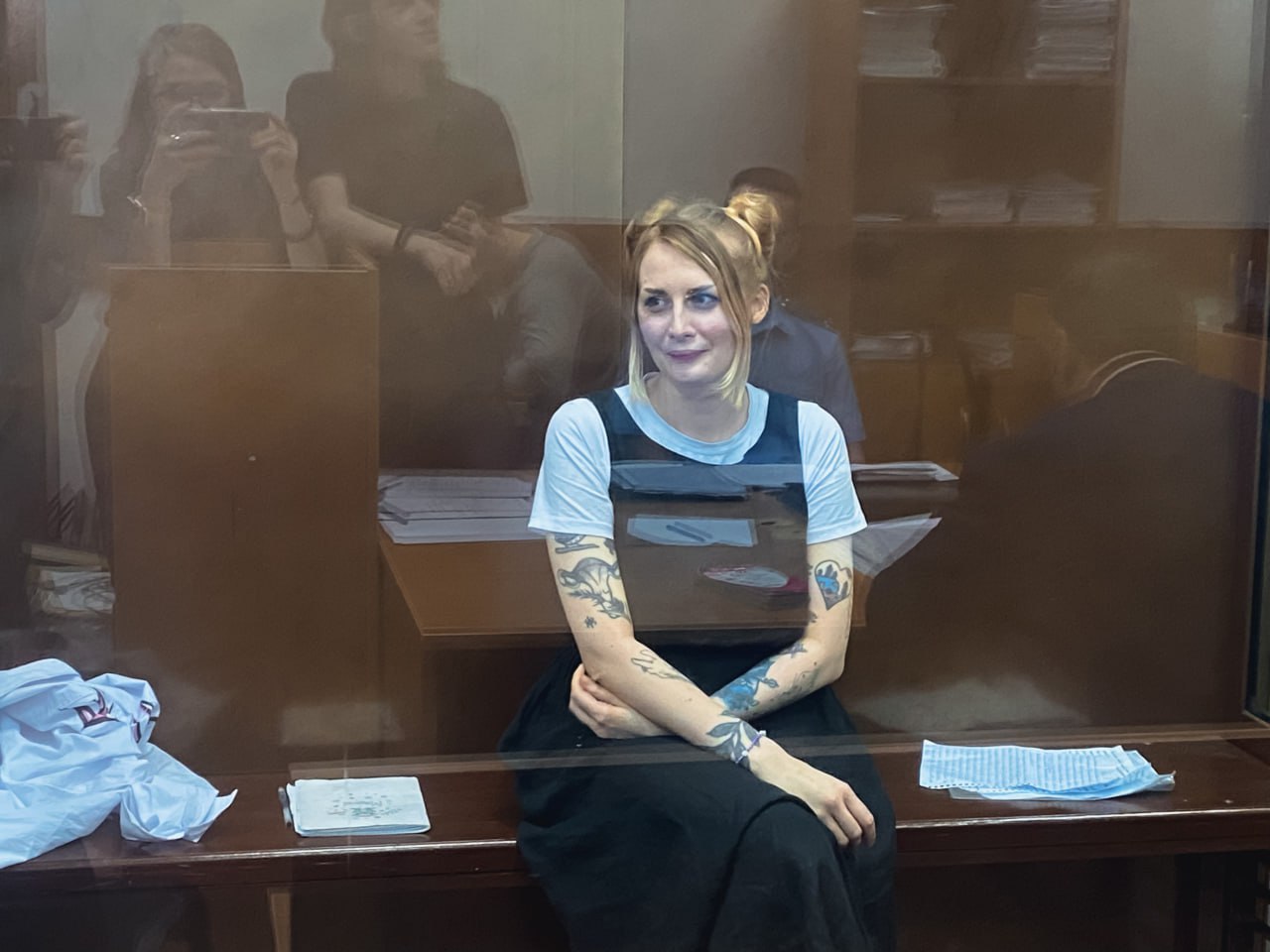
After the full-scale invasion commenced, the attacks on comedians, and celebrities in general, intensified further. Some comedians were declared foreign agents, like the star celebrity Maksim Galkin, who fled Russia early into the war, along with the aforementioned Denis Chuzhoi. The Kremlin later put pressure on UAE authorities to cancel Galkin’s appearance in Dubai. Last year, a stand-up comic and blogger Anna Bazhutova was sentenced to 5 and a half years in prison — for reading testimonies of Bucha residents on a livestream.
|
|
|
Anna “YokoBovich” Bazhutova in court / Photo: OVD-Info readers |
|
|
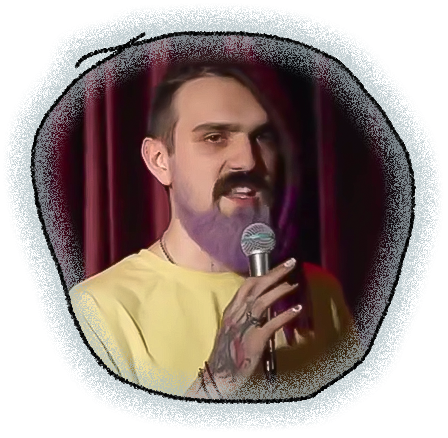
The most recent case — and also the most disturbing — is the story of Artemiy Ostanin. Back in February, Artemiy participated in a YouTube stand up competition where he had to make a joke in 60 seconds. A relatively inexperienced comedian, he stumbled through a joke about his altercation with a legless man on the subway. He didn’t get many laughs, and the entire event would have been forgotten — but, in mid-March, the video was shared by a big pro-war Telegram channel. The channel initiated a media campaign against Artemiy, claiming that he made a joke about Russian war veterans.
|
| |
Artemiy Ostanin / Screenshot: “третий канал” YouTube channel |
| Artemiy denied the allegations, but the “uncivil society” was baying for blood. Another one of Artemiy’s stand up sets was analysed, and the pro-war crowd found a joke that could be presented as anti-war:
|
|
|
“2025 has been declared the year of the Defender of the Fatherland, so we will give meat grinders to all mothers who have lost their sons in the [special military operation]. It makes sense. It turns out that we now have deputies with a sense of humor. Wow. This is the kind of country we live in.”
|
|
|
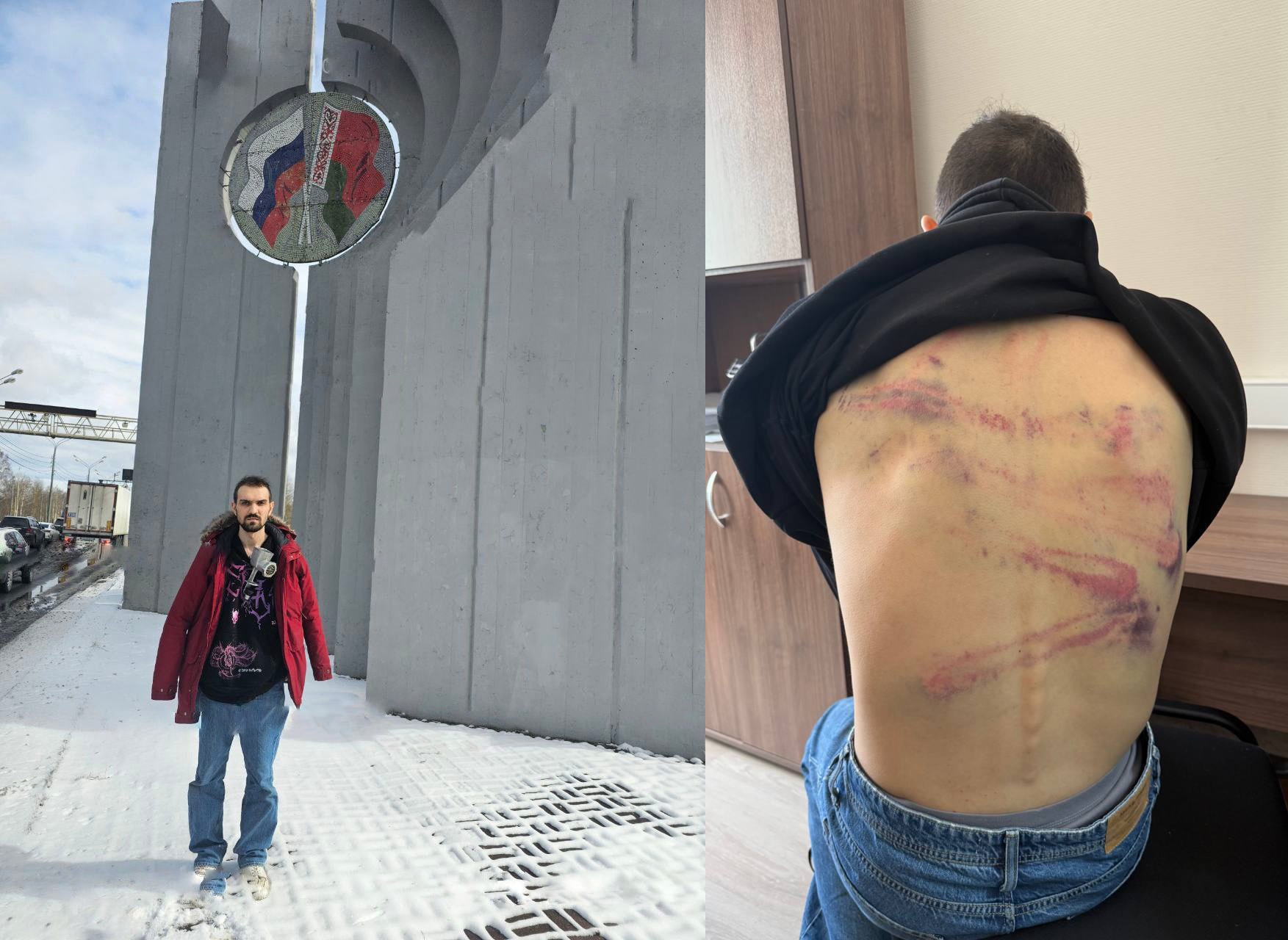
Artemiy tried to flee Russia, crossing the border with Belarus on 17 March. But the Belarusian security services, closely aligned with the Kremlin, captured him on the border. There, they shaved his head and beat him. Before handing him over to their Russian colleagues, they hung a meat grinder on Artemiy’s neck. His lawyer says that Artemiy’s captors broke his back and ribs while beating the comedian. He is now in pre-trial detention awaiting trial for “fomenting hatred”.
|
|
|
1 — Artemi Ostanin with a meat grinder around his neck at the Russian-Belarusian border / Photo: Ministry of Internal Affairs of Belarus;
2 — Beating marks on his body / Photo: Eva Merkacheva’s Telegram channel |
|
|
Please answer our questionnaire so we can better understand our audience! |
|
|
Sources cited in the reading list are not necessarily aligned or in a formal partnership with us. It is just what the editor finds interesting. |
|
|
The Digest is created by OVD-Info, written by Dan Storyev, edited by Dr Lauren McCarthy |
OVD-Info English newsletter privacy policy: how we work with your data |
|
|
|