EXPLAINING THE STRUGGLE FOR HUMAN RIGHTS IN RUSSIA |
|
|
Hello and welcome back to the Digest. |
Today we are celebrating the release of Belarusian political prisoner Siarhei Tsikhanousky and 13 others. |
In solidarity, Dan Storyev |
|
|
Donate to OVD-Info to keep us running |
|
|
Trigger warning:
This is a newsletter about Russian repressions. Sometimes it will be hard to read. |
|
|
Belarusian activist released |
| |
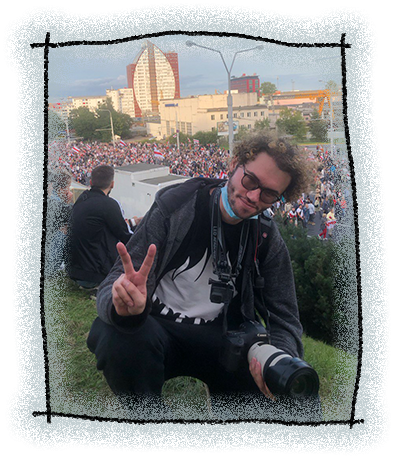
Belarus is a post-Soviet country to the west of Russia. Landlocked on the edge of Eastern Europe it has long been called Europe’s last dictatorship. Belarus is near and dear to my heart, as this is where I began my reporting career in earnest, reporting on the 2020 protests that shook the nation. |
|
|
While Belarus is its own country with a distinct history and culture, developments there are heavily influenced by the Kremlin and often foretell the events in Russia. The bitter joke often told by Russian and Belarusian activists in the 2010s is that Belarus is a “demo-version” of Russia. Hence, understanding Belarus can be relevant for anyone seeking to understand Russia and especially those trying to understand repression in the region.
|
| Dan Storyev in Minsk during the 2020 protests / Photo: courtesy of Dan Storyev |
|
|
I wanted to cover Belarus today and focus specifically on Sviatlana and Siarhei Tsikhanousky as this couple has defined the recent history of the Belarusian pro-democracy movement. |
|
|
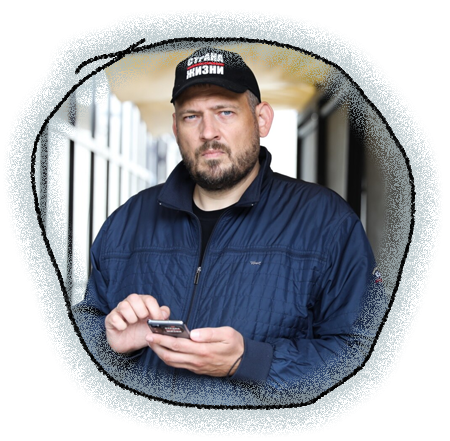
Siarhei Tsikhanousky in 2020 / Photo: Uladz Hrydzin, RFE/RL |
| Siarhei started his activist career in 2019 with a popular YouTube channel which he used to criticise government corruption and interview regular people and dissidents. This is similar to how many Russian, Belarusian and other post-Soviet activists started off as vloggers and bloggers, since the “regular” political space was closed to outsiders.
|
|
|
In 2020 he announced he would run in the presidential election. Now, just like in Russia, one can’t simply run for president in the theatrical “elections” that the state engineers. The state-controlled electoral committee refused to certify Tsikhanousky. The state later detained him.
|
Belarusian president Alexander Lukashenko, who has maintained his grasp on power since 1994, could have been celebrating, as his key opponent was now in jail. His commission even allowed Siarhei’s wife, Sviatlana Tsikhanouskaya, to be certified as a presidential candidate. Lukashenko probably didn’t see Sviatlana as a threat because she was a woman, repeatedly claiming that a woman simply “can’t rule Belarus”.
|
|
|
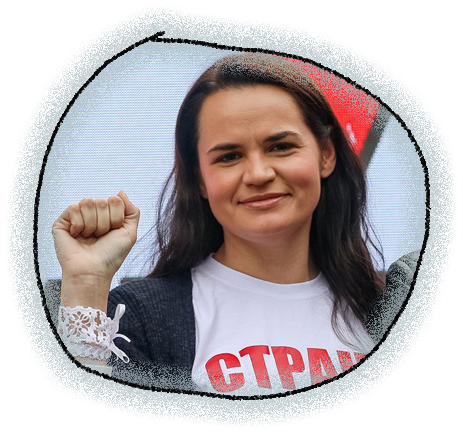
However, something unique happened. Independent observers estimate Lukashenko received only about 3% of the vote. However, Lukashenko declared victory anyway. A massive protest broke out. Sviatlana emerged as a leader of the largest protest movement in Belarusian history. Belarusians, tired of dictatorship and angered by the lackluster COVID response, went onto the streets in the hundreds of thousands. |
|
Sviatlana Tsikhanouskaya during her presidential campaign, 2020 / Photo: Sviatlana Tsikhanouskaya’s Telegram channel |
|
|
It is hard to overstate how unique this was. It seemed that the entire nation was out protesting and I remember activists from all over the post-Soviet space streaming over the closed borders to participate in the protests for democracy — the momentous protests generated so much hope. |
|
|
Since the start of 2023, coverage of the Russian economy has consistently invoked a wartime ‘boom’ driven by war spending. This ‘boom’ is the lens through which the country’s resilience under sanctions is explained, a means of justifying the impressive figures the Kremlin touts as proof of successes. Yet quality of services and life is visibly worse for most Russians in wartime. Years of underspending, underinvestment, and a failure to reform institutions can’t be undone by blood money for families who’ve lost their loved ones at the front.
|
|
|
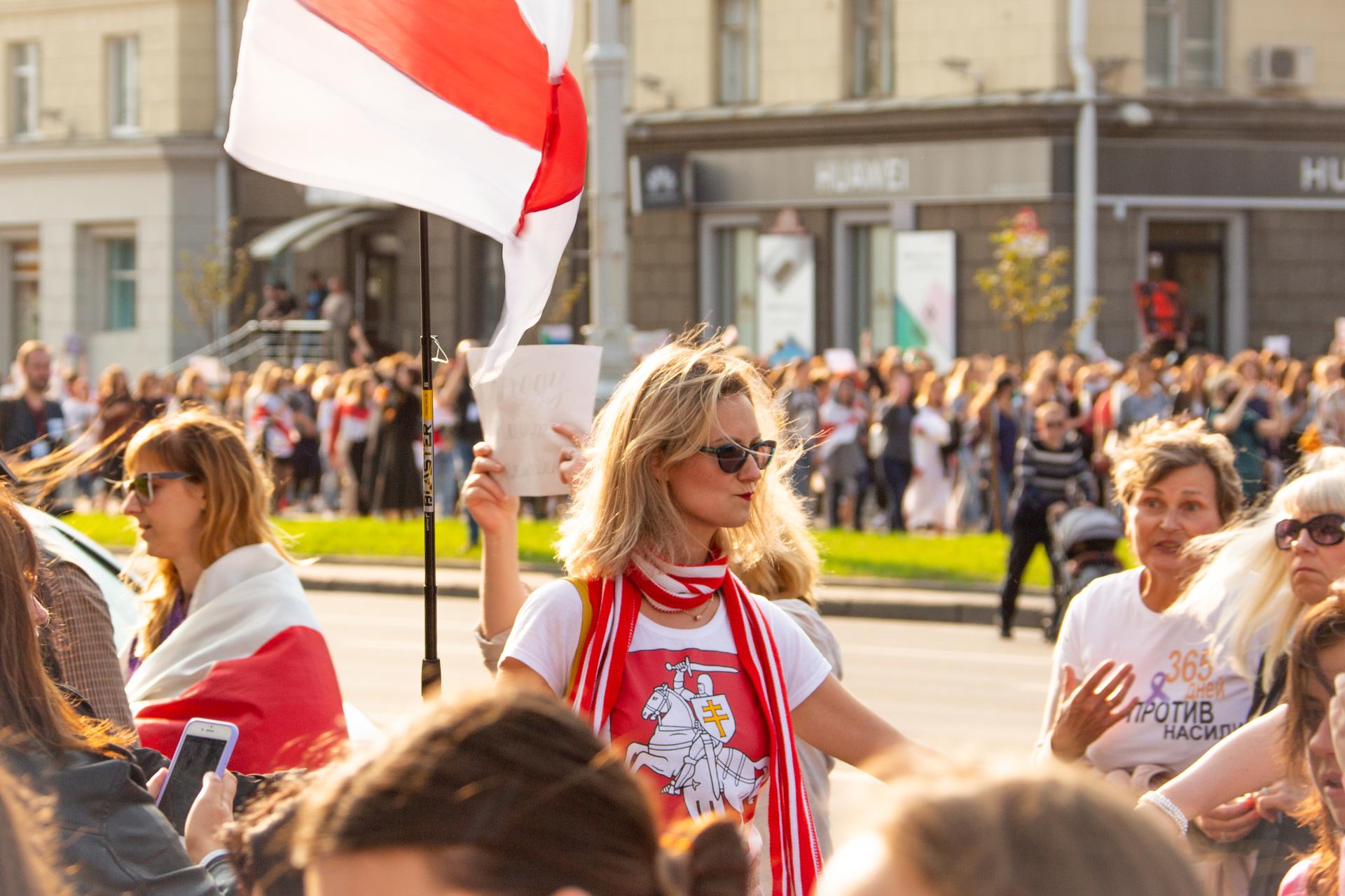
Belarusian protests were seen as an example and inspiration for those yearning for democratic change in Russia. A popular chant I recall from the 2020 streets of Minsk was “from Khabarovsk [in the Russian Far East] to Brest [on the Belarusian-Polish border] there is no place for a dictatorship.” |
Women played a very important role leading the protests. Minsk, summer 2020 / Photo: Dan Storyev |
It was a beautiful moment. And then it ended. Lukashenko’s security services stayed loyal to the regime and they went on torturing and capturing protesters. There were deaths, rapes, inhumane beatings. Sviatlana had to flee the country and some of her closest allies were put in jail. An exodus of people into the EU ensued. Most of my Belarusian friends now live in exile. Those who had to stay in the country now live in fear.
|
|
|
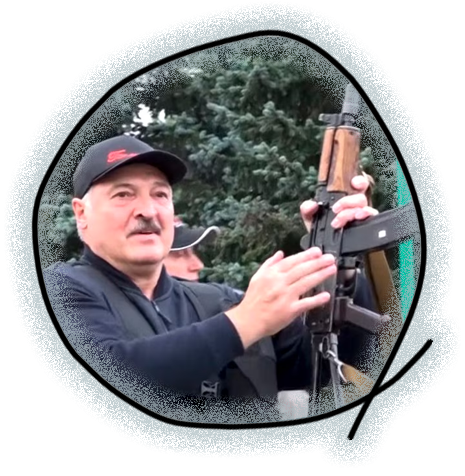
Alexander Lukashenko poses with a Kalashnikov during the violent crackdown on protests. Minsk, 23 August 2020 / Photo: State TV and Radio Company of Belarus |
|
Putin helped Lukashenko rhetorically, economically and even formed a reserve corps of security services to potentially come to his aid. In January of 2022, Lukashenko and Putin sent their special forces to help Kazakhstan’s autocracy to deal with their protest wave. In February of 2022 Putin used Belarus as one of the launching pads for his war on Ukraine. The dictators won in Belarus — at least for now. |
|
|
They might have strangled the protest in the short term, but they could not extinguish hope. Belarusians in exile work tirelessly advocating for their rights and for the survival of the thousands of political prisoners who are languishing in torturous conditions in Belarusian prisons. Last week we saw the results of this work — Siarhei Tsikhanousky, along with 13 other Belarusian political prisoners, was freed thanks to American pressure.
|
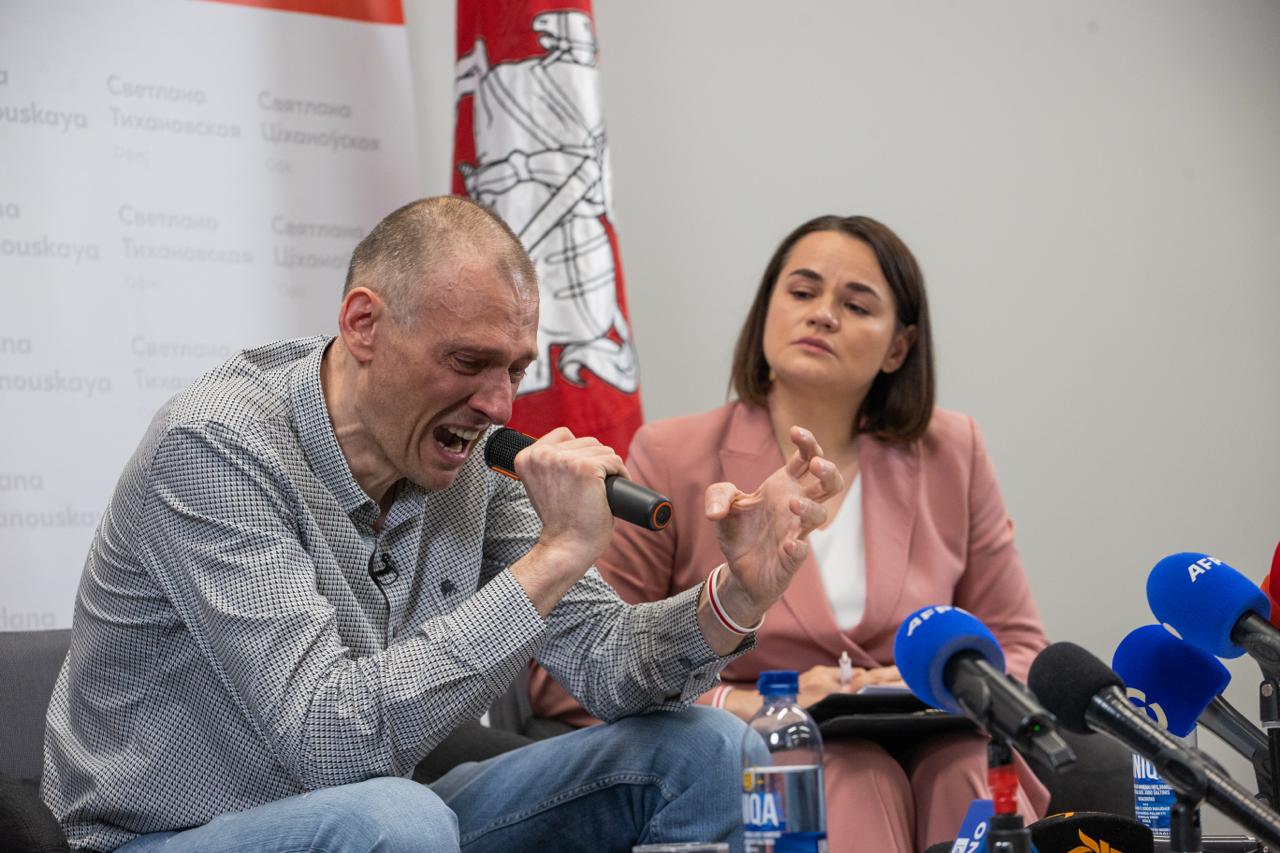
The man is now almost unrecognisable, looking like he aged a decade after spending five years in Lukashenko’s jail. During his press conference Siarhei broke down in tears, as he recounted the abuses he and his fellow political prisoners had to endure. As Sviatlana said on her Instagram, at first Siarhei’s stories inspire “horror, and then rage”. |
|
|
Siarhei and Sviatlana Tsikhanousky during a press conference in Vilnius, 22 June 2025 / Photo: Sviatlana Tsikhanouskaya’s Telegram channel |
|
|
She adds that her government in exile will “use that rage towards freedom for political prisoners. That Siarhei is now free is giving us strength and resolve. We will work until every Belarusian family is reunited.” |
| |
Reading and writing about human rights in Russia or Belarus or the post-Soviet space more broadly can often inspire nothing but fear and depression. However, we must remember that sometimes our hopeless work can bring happiness and hope — reunite families and free political prisoners. |
|
|
No one should face injustice alone! |
|
|
Sources cited in the reading list are not necessarily aligned or in a formal partnership with us. It is just what the editor finds interesting. |
|
|
The Digest is created by OVD-Info, written by Dan Storyev, edited by Dr Lauren McCarthy |
OVD-Info English newsletter privacy policy: how we work with your data |
|
|
|