EXPLAINING THE STRUGGLE FOR HUMAN RIGHTS IN RUSSIA |
|
|
Hello and welcome back to the Digest. |
Today I want to cover an unusual story of an activist who aids Russian civilians caught in the crossfire of the war. He is far from an anti-war figure, and his activism is rooted in helping the Russian military. However, I feel like this story is valuable to show the diversity of Russian grassroots activism — and show how the Russian authorities’ cynicism ends up hurting even those who are supporting the Kremlin. Note that OVD-Info as an organisation, as well as I personally, take a consistently anti-war position, but we believe in the value of covering the Kremlin’s attacks on freedom of assembly, regardless of the activists’ views.
|
In solidarity, Dan Storyev |
|
|
Donate to OVD-Info to keep us running |
|
|
Trigger warning:
This is a newsletter about Russian repressions. Sometimes it will be hard to read. |
|
|
Between a rock and a hard place |
| |
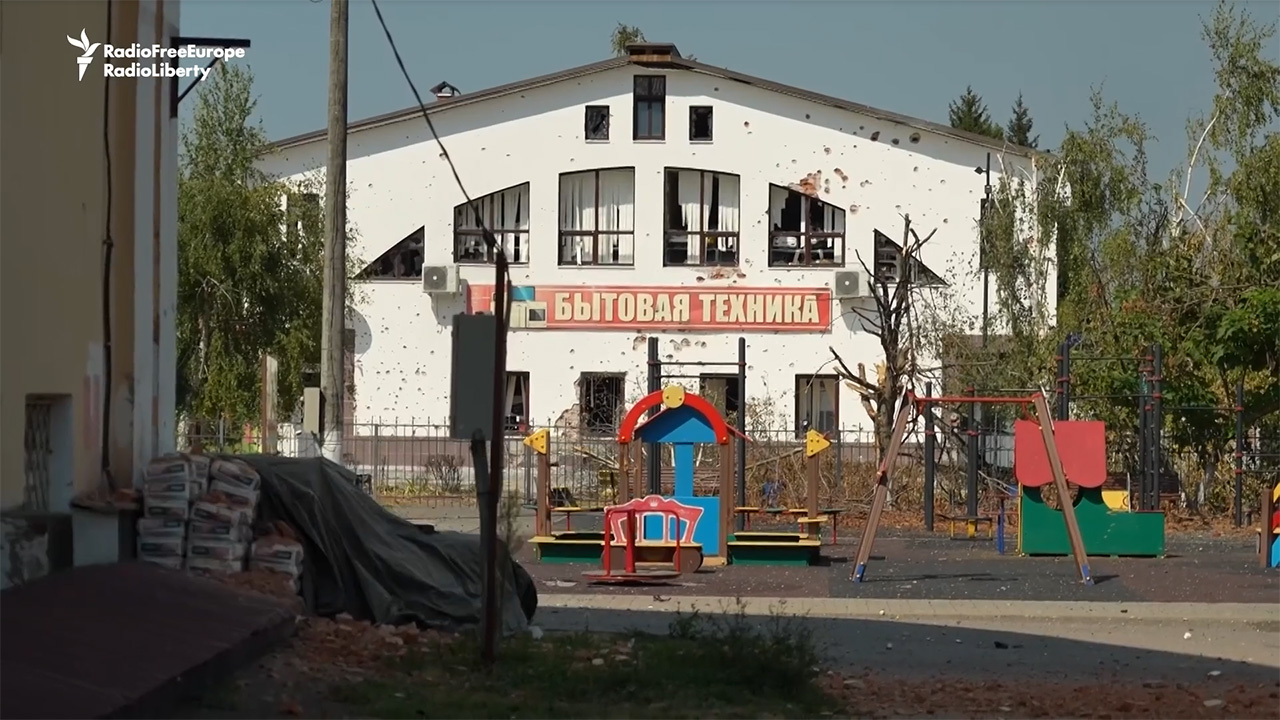
In the early days of the full-scale invasion Russian civilians were insulated from the most immediate impacts of the war. This, however, soon changed, as Kyiv began striking Russian territory. In 2024, the Ukrainian military engaged in an ongoing invasion of Russia’s Kursk region — becoming the first foreign troops on Russian soil since WWII.
|
|
|
The border town of Sudzha, Kursk region, was captured by the Ukrainian Army in August 2024. It was recaptured by the Russians in March 2025 / Screenshot: RFE/RL |
|
|
As is par for the course in this war, the fighting took a heavy toll on the civilian population caught in the crossfire. Additionally, Russian civilians who went through shelling, and sometimes occupation, were faced with inadequate support and outright rejection from their own government.
|
|
|
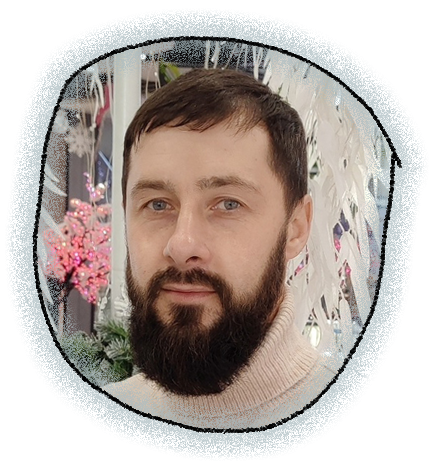
Roman Solodov / Photo: social media |
|
We spoke with a volunteer who has dedicated himself to helping Russian civilians hurt by the war — and who was immediately persecuted by the Russian government for his activism. Roman Solodov is 39 years old and comes from the Khomutovsky district of the Kursk Region. This small district, with a population under 10,000, consists primarily of villages, forests and fields. It borders Ukraine to the west.
|
|
|
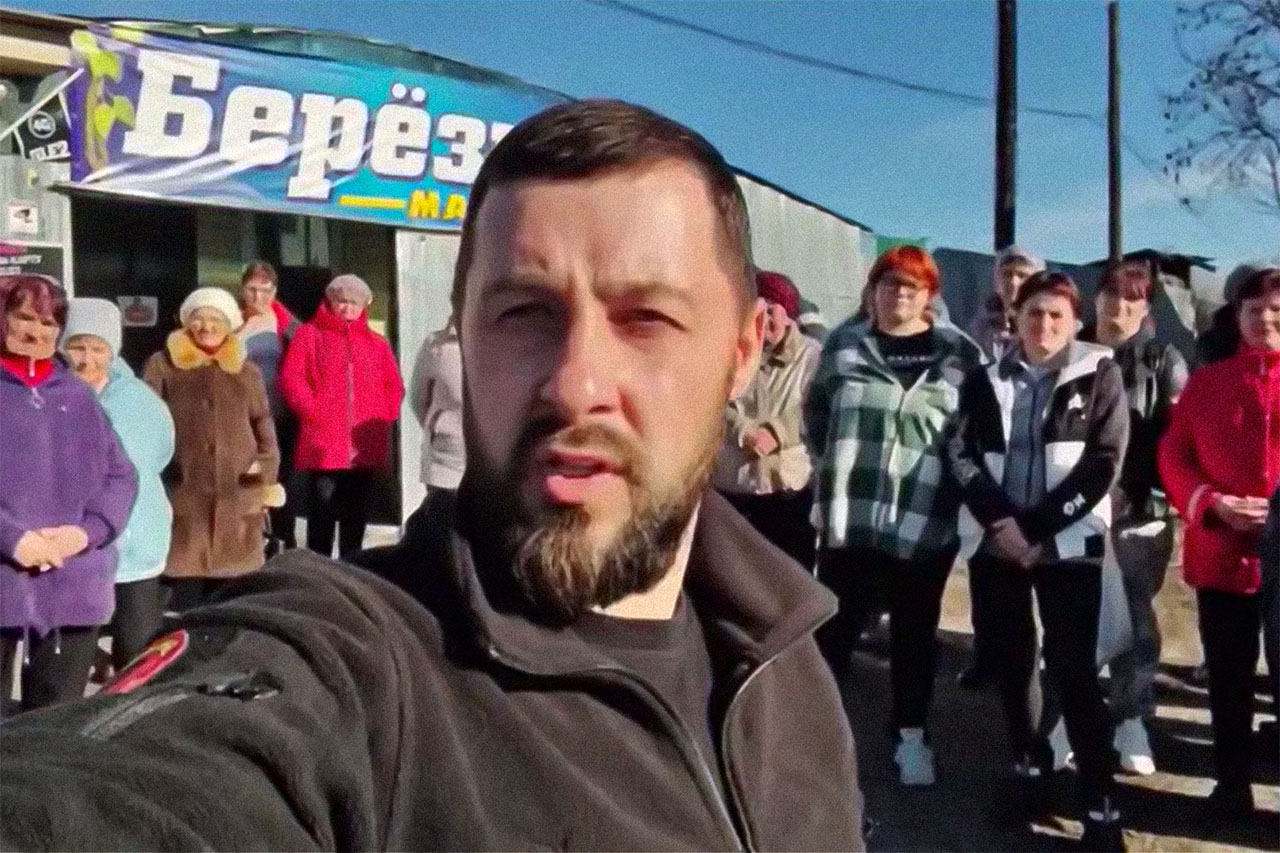
In August last year, after the Ukrainian Armed Forces entered the region and shelling became more frequent, local authorities announced an evacuation. Many residents chose to stay in their villages, as they couldn’t afford to move. After the Ukrainian army retreated, Roman began holding meetings with residents, recording videos, trying to draw the authorities’ attention to the lack of social support and payments. The authorities responded by arresting him.
|
|
|
Many of these villages are within five kilometers of Ukraine’s border, meaning that Ukrainian forces can easily strike them. Roman says that “people still live in almost all of them. They do not have the financial means to leave there to buy housing. It is impossible to quickly obtain housing certificates in exchange for the property they have here. People left, lived in temporary accommodation centers, but this is not the kind of environment where you can stay for a long time. After all, it is just a large dormitory. People returned to their villages. Many, unfortunately, could not even figure out how to make the state compensate them for rented housing.”
|
There is no hospital in the district, and emergency response teams simply can’t deliver people to the nearest medical facility quickly enough. While there is demand for a hospital in the district, Roman says the authorities are refusing to open it, since the district is evacuated — on paper. |
|
|
A screenshot from a video of one of Roman Solodov’s meetings with residents of border villages, which prompted his prosecution. It was later deleted from his Telegram channel |
|
|
Prior to the war Roman worked as a psychologist. Having had a military education, he helped form a volunteer emergency response group in the early days of the war, taking care of fires and protecting houses from looters. This overtime work established Roman as a community leader: |
“During hard times, civilians began to approach me and my group with personal questions about evacuation and paperwork for payments. There were disabled people in the villages — we resolved issues related to their transportation. Word of mouth started working, the ball unraveled, people began to contact us en masse. Over time, contradictions arose related to social payments — our district found itself on the sidelines. Although legally, these payments should be made.”
|
Roman felt himself responsible for the civilians left without payments, without evacuation and without medical aid. After invites from the locals he began traveling around villages and recording messages to local authorities. |
“People started calling me, inviting me. And this is a five-kilometer zone. As a man, I couldn’t say no. The residents had a feeling of hopelessness. I went there and was surprised how many people there were! They were, to put it mildly, heartbroken.” In one of his videos Roman says, indignantly: “this is right on the frontline… people live here, without any pay. There is no resettlement — they would be happy to leave but they have no money for moving or new apartments.”
|
|
|
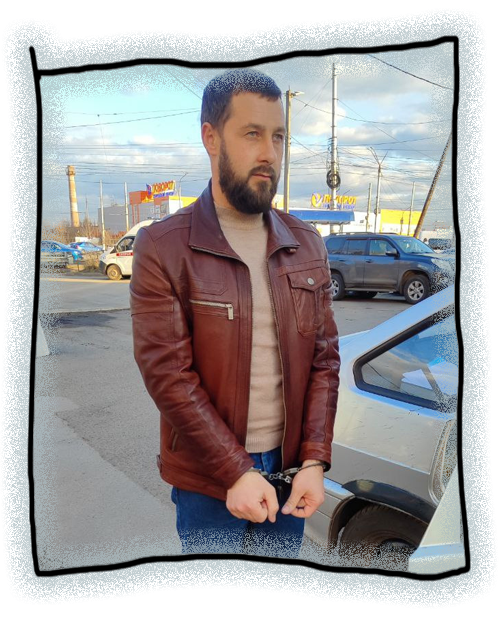
Once the authorities caught wind of Roman’s activism, they summoned him to the police precinct, writing him up for every meeting he had had — and on 17 March sentencing him to 9 days of detention for organising “unlawful gatherings.” Roman is far from an anti-war activist, referring to Ukrainians solely as “the enemy” in his public messaging. Inadvertently, he became an epicentre of resentment aimed at the Kremlin, which has ignored the need of Russians stranded under fire.
|
| Roman Solodov under arrest / Photo: social media |
|
|
“When I came out of jail, I was stunned by how tragically people took it. They were worried for me as if they themselves were arrested... We have drawn up a collective appeal to the governor of the Kursk region and the Presidential Administration. We will wait for a response... For these three years, people have been helping [the army] with the last of their strength, collecting money, helping our soldiers, feeding them - even now. But people want to feel support from the state, however there is none."
|
|
|
This is an English rewrite of an article by Maria-Maya Govzman, published on our Russian website |
|
|
Please answer our questionnaire so we can better understand our audience! |
|
|
Sources cited in the reading list are not necessarily aligned or in a formal partnership with us. It is just what the editor finds interesting. |
|
|
The Digest is created by OVD-Info, written by Dan Storyev, edited by Dr Lauren McCarthy |
OVD-Info English newsletter privacy policy: how we work with your data |
|
|
|