EXPLAINING THE STRUGGLE FOR HUMAN RIGHTS IN RUSSIA |
|
|
Hello and welcome back to the Digest! |
Today we want to tell you about one of OVD-Info’s most important tools — the one that turns individual concern into collective pressure. It is called Dyatel (‘Woodpecker’ in Russian), and for more than four years it has helped people inside Russia push back against repression in a very concrete way. |
A quick reminder before we begin: everything OVD-Info does is possible only thanks to you backing us up. Maintaining tools like Dyatel, responding to urgent cases, and running public campaigns constantly requires resources. Please consider supporting us via the link below. |
Alongside you,
The OVD-Info team |
|
|
Donate to OVD-Info to keep us running |
|
|
Trigger warning:
This is a newsletter about Russian repressions. Sometimes it will be hard to read. |
|
|
Dyatel is an online service created by OVD-Info that allows people to legally send en masse complaints and petitions to Russian state authorities. |
It was launched in the spring of 2021, after mass protests in support of Alexei Navalny. More than 11,000 people were detained across the country. Police departments introduced what they called ‘the Fortress mode’ — a high-security lockdown protocol which seals the station off and urges officers to prepare for a potential armed threat or emergency. In practice, it became a way to prevent lawyers from accessing detainees. |
Thousands of people were cut off from legal help. Familiar defense mechanisms stopped working, so our attorneys had to come up with new defense strategies tailored to new conditions. |
One thing, however, remained unchanged: under Russian law, state institutions are still required to respond to official appeals. Dyatel was created in view of this simple fact. The idea was to act collectively — and to make it clear that every detained person is backed up by thousands watching, writing, and refusing to look away.
|
The name came naturally. A woodpecker is small but persistent. With enough knocks repeated, it breaks through even the thickest bark. Dyatel works the same way. |
|
|
What difference does it make? |
|
|
Over the past four and a half years, 165,283 appeals have been sent through Dyatel. These are not abstract numbers. They are tied to real people — and real outcomes. |
Over the past four and a half years, 165,283 appeals have been sent through Dyatel. These are not abstract numbers. They are tied to real people — and real outcomes. |
Here are just a few examples. |
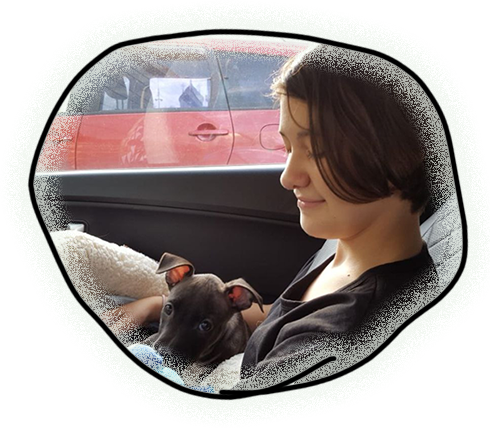
Anya Zhuravleva, a 16-year-old girl, was accused of involvement in a terrorist organization and spent more than a year and a half in pretrial detention. During this time, she was subjected to severe abuse by her inmates. After more than 7,000 appeals sent via Dyatel, Anya was withdrawn from the unsafe environment and transferred to house arrest.
|
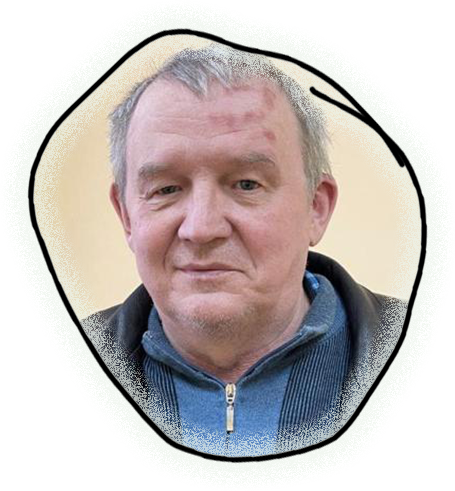
Sergey Veselov, a blogger persecuted for his anti-war position, was kept in prolonged isolation in punishment cells. Authors of more than 2,000 appeals demanded medical examinations for Sergey and his isolation to be ended. It worked. |
When artist Lyudmila Razumova went on a hunger strike due to the lack of medical care in detention, our supporters used Dyatel to demand her transfer to the prison hospital. Lyudmila received treatment, and the immediate threat to her life subsided. |
In different cases, the same pattern prevails: thousands of people refuse to stay silent. |
Dyatel today: appeals and petitions |
Dyatel has recently expanded its functionality. In addition to sending individual appeals, users can now sign petitions. |
- It takes less than a minute to send an appeal or to sign a petition
- Only your name and email are required
-
Your data is stored securely and is not shared with Russian authorities
- Russian citizenship is not required
- Submitting appeals is fully legal, even when they criticize the authorities
|
When you sign an appeal, it gets automatically sent to the relevant institution on your behalf.
|
If you sign a petition, it is delivered to officials. We know many examples where petitions have actually worked, either partially or fully — from small petitions concerning animal rights or local issues in specific regions to large nationwide campaigns, such as the petition to cancel the pension reform. |
What we are focusing on right now |
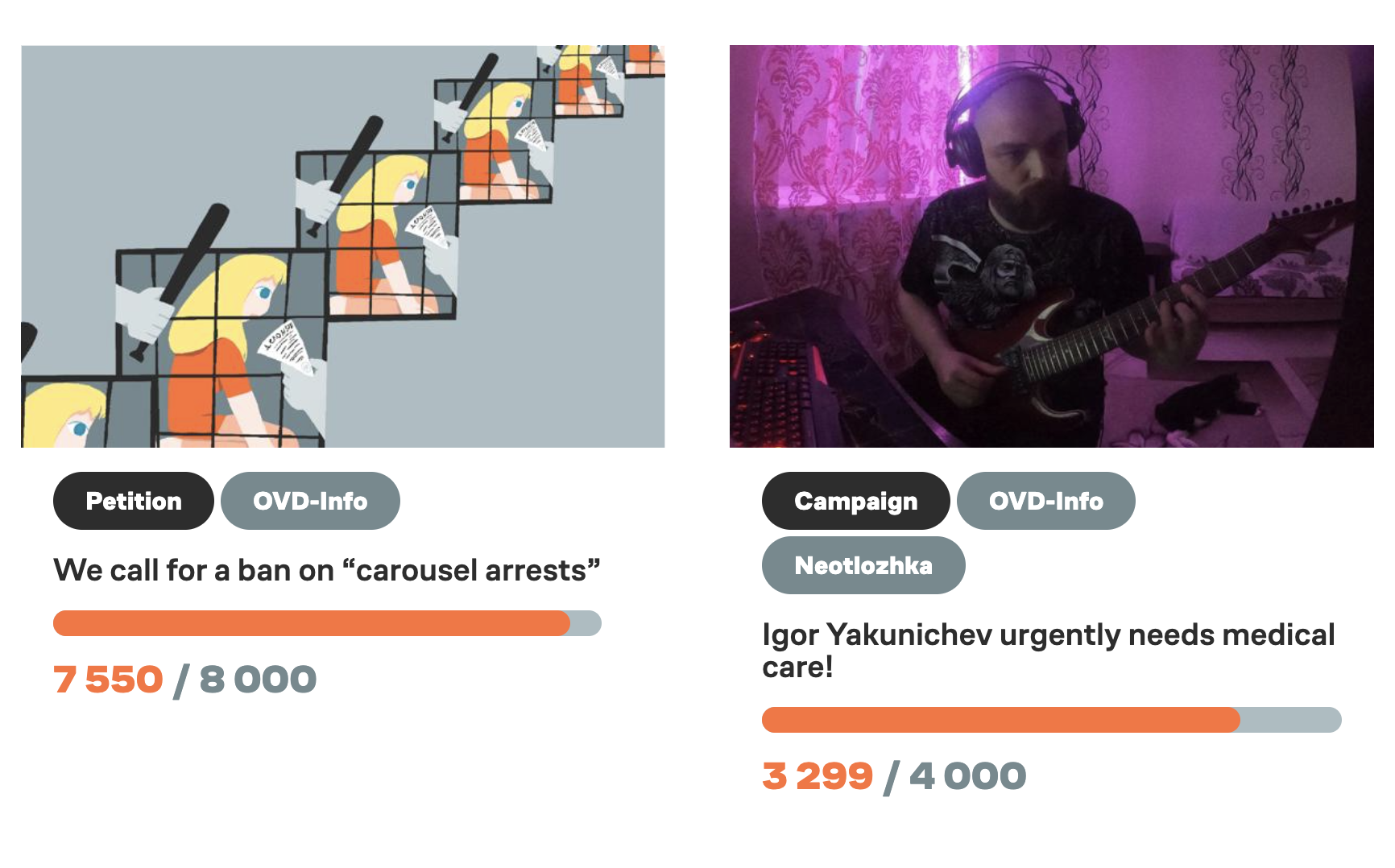
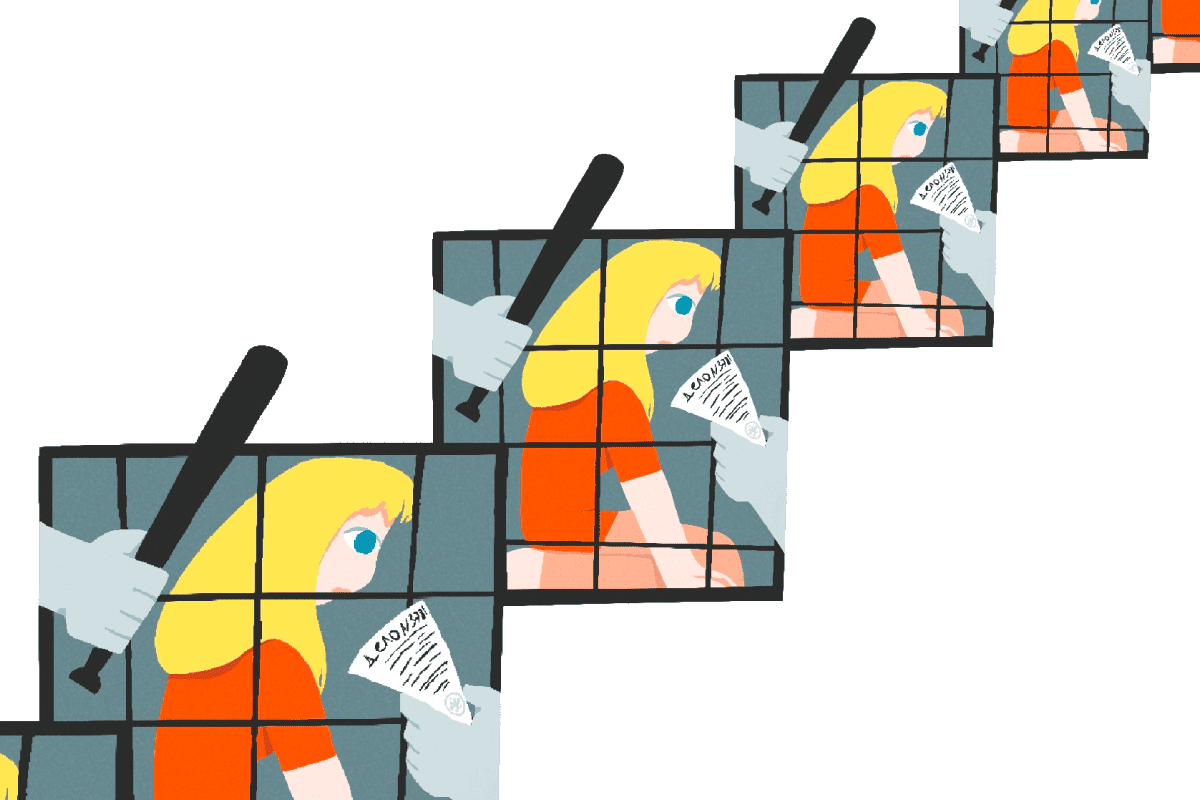
Today, Dyatel is being used to challenge the practice of ‘carousel arrests.’ |
This is a practice of keeping a person in detention for weeks through consecutive administrative arrests — one after another — without opening a criminal case. It is a way to isolate and exhaust people while formally staying within administrative law. |
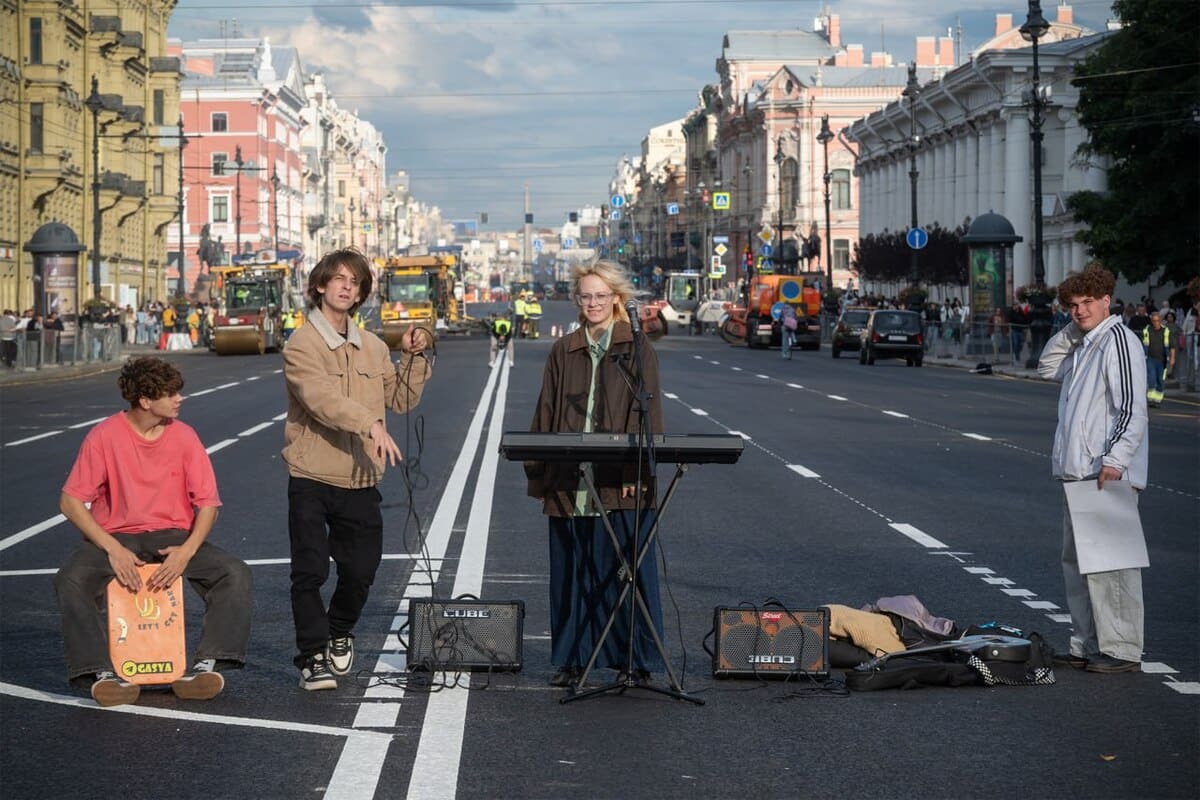
One of the most visible recent cases involved Stoptime, a group of young street musicians from St. Petersburg. After performing songs by artists banned for their political views, the musicians were detained repeatedly. Each member of the band went through carousel arrests. Similar persecution affected other musicians across Russia who showed solidarity with Stoptime.
|
Stoptime performing in St. Petersburg, October 2025. Photo: Bumaga |
Thanks to public attention, the musicians were released, though some of them were ultimately forced to leave Russia. The practice itself, however, continues. |
You can help draw attention to abuse by signing the petition below. It takes less than a minute. |
|
|
Dyatel was created for times when it feels like nothing can be done. Gradually, it has grown into a system where thousands of people act together protecting others and, in the long run, protecting the space for dissent itself. |
Thank you for staying with us, supporting our work, and continuing to believe collective action matters.
|
As long as you are with us, we will keep knocking. |
|
|
The Digest is created by OVD-Info, edited by Dr Lauren McCarthy |
OVD-Info English newsletter privacy policy: how we work with your data |
|
|
|